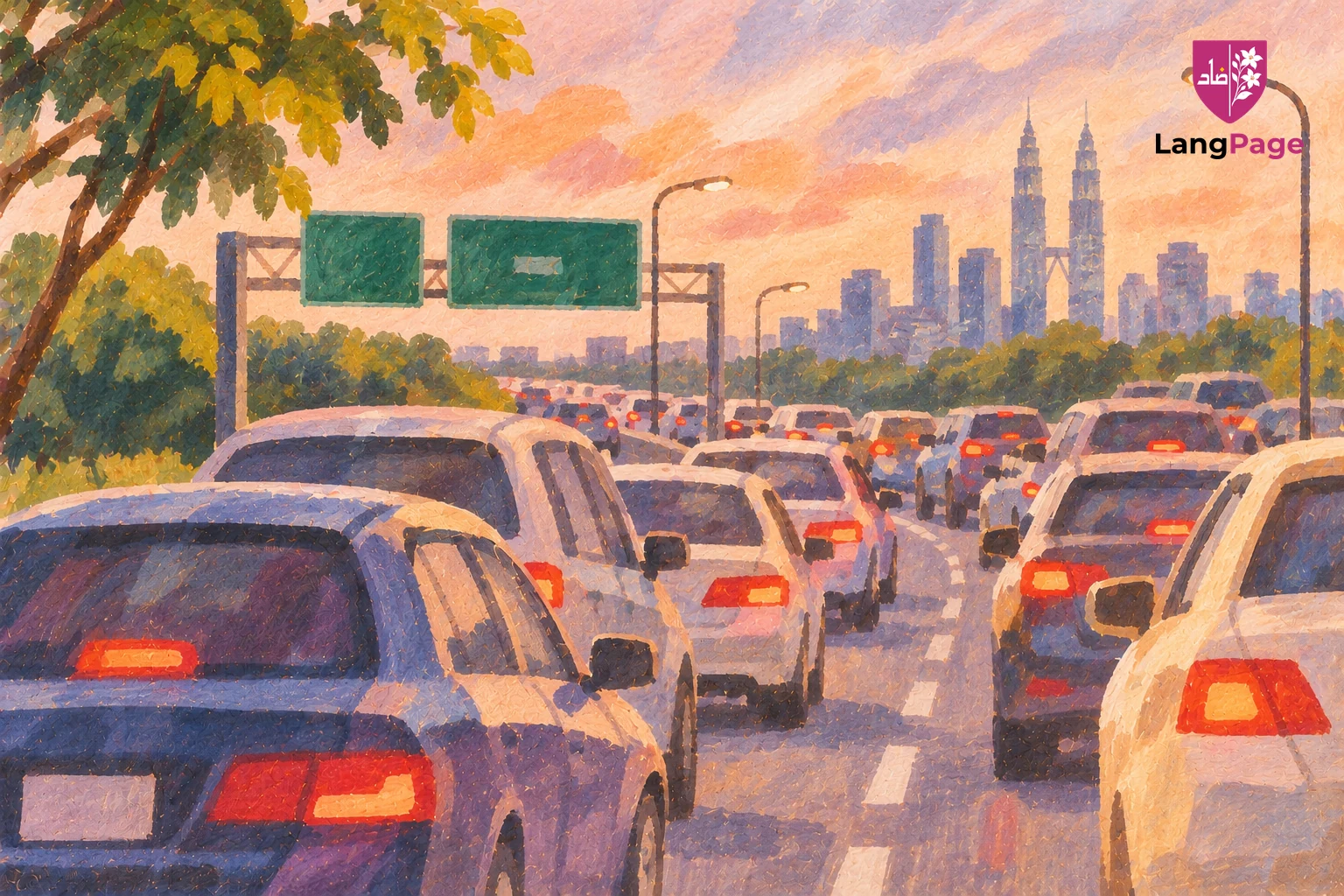
Traffic Jam in Arabic
Ustazah Alaa · November 9, 2026 · 3 min read
Quick Answer
Traffic jam in Arabic is اِزْدِحَام مُرُورِيّ (izdiḥām murūrī), and in Malay it is kesesakan lalu lintas. These are Modern Standard Arabic (MSA) words, the Arabic you hear in news and traffic reports.
Introduction
In early November 2026, about 3.3 million vehicles a day were expected on Malaysian highways over the Deepavali holiday period, as people travelled home. When you are stuck in traffic like that, how do you say it in Arabic?
If you want to learn Arabic for everyday life, traffic talk is a great place to start, because it comes up all the time. Here are the six words that matter most, with sentences to practise.
How do you say "traffic jam" in Arabic?
| Arabic | Pronunciation | Meaning |
|---|---|---|
| اِزْدِحَام مُرُورِيّ | izdiḥām murūrī | traffic jam (kesesakan lalu lintas) |
| طَرِيق سَرِيع | ṭarīq sarīʿ | highway (lebuh raya) |
| سَيَّارَة | sayyāra | car (kereta) |
| تَأَخُّر | taʾakhkhur | delay (kelewatan) |
| إِشَارَة مُرُورِيَّة | ishāra murūriyya | traffic light (lampu isyarat) |
| طَرِيق بَدِيل | ṭarīq badīl | alternative route (laluan alternatif) |
اِزْدِحَام: it means crowding in general, and مُرُورِيّ ("of traffic") tells us it is on the road.
ā, ī and ū are long vowels, ḥ is a soft breathy "h", ṭ is a heavy "t", kh is like the "ch" in Scottish "loch", and ʿ and ʾ are sounds from the throat.
What useful sentences can you use?
| Arabic | Pronunciation | Meaning |
|---|---|---|
| هُنَاكَ اِزْدِحَامٌ مُرُورِيٌّ عَلَى الطَّرِيقِ السَّرِيعِ. | Hunāka izdiḥāmun murūriyyun ʿalā ṭ-ṭarīqi s-sarīʿ. | There is a traffic jam on the highway. |
| تَأَخَّرْتُ بِسَبَبِ الِازْدِحَامِ. | Taʾakhkhartu bi-sababi l-izdiḥām. | I was late because of the traffic. |
| اِنْتَظَرْنَا طَوِيلًا عِنْدَ الْإِشَارَةِ الْمُرُورِيَّةِ. | Intaẓarnā ṭawīlan ʿinda l-ishāra l-murūriyya. | We waited a long time at the traffic light. |
| سَنَذْهَبُ بِالسَّيَّارَةِ فِي الصَّبَاحِ. | Sa-nadhhabu bi-s-sayyāra fī ṣ-ṣabāḥ. | We will go by car in the morning. |
Can you follow a short dialogue?
- أَحْمَد: أَيْنَ أَنْتِ؟ (Where are you?)
- سَارَة: أَنَا فِي السَّيَّارَةِ، وَهُنَاكَ اِزْدِحَامٌ مُرُورِيٌّ. (I'm in the car, and there is a traffic jam.)
- أَحْمَد: هَلْ هُنَاكَ طَرِيقٌ بَدِيلٌ؟ (Is there an alternative route?)
- سَارَة: لَا، سَأَتَأَخَّرُ قَلِيلًا. (No, I'll be a little late.)
Did You Know?
اِزْدِحَام comes from the root ز-ح-م, which is about pushing and crowding together. You can explore more word families like this in Rooto.
Summary
- Traffic jam = اِزْدِحَام مُرُورِيّ; highway = طَرِيق سَرِيع.
- Delay = تَأَخُّر; alternative route = طَرِيق بَدِيل.
- Car = سَيَّارَة; traffic light = إِشَارَة مُرُورِيَّة.
FAQ
Is اِزْدِحَام only used for traffic?
No. It means crowding in general, so you can also use it for a crowded market or a packed room. Adding مُرُورِيّ makes it about traffic.
Which Arabic should I learn for everyday life?
It depends on your goal. MSA is best for reading news and formal speech, like the words in this post. When people chat about the traffic, they use their own dialect, so many learners add one, such as Syrian/Levantine Arabic.
Keep Learning
Not sure whether to start with MSA or a dialect? Read Syrian Dialect vs MSA: What Should You Learn?.
To practise everyday Arabic with a teacher, LangPage offers live Arabic lessons on Zoom with me, one-to-one or in the small-group Arabic Kickstart program. You can see all the Arabic courses on the classes page.