Arabic at the Train Station
Ustazah Alaa · November 21, 2026 · 3 min read
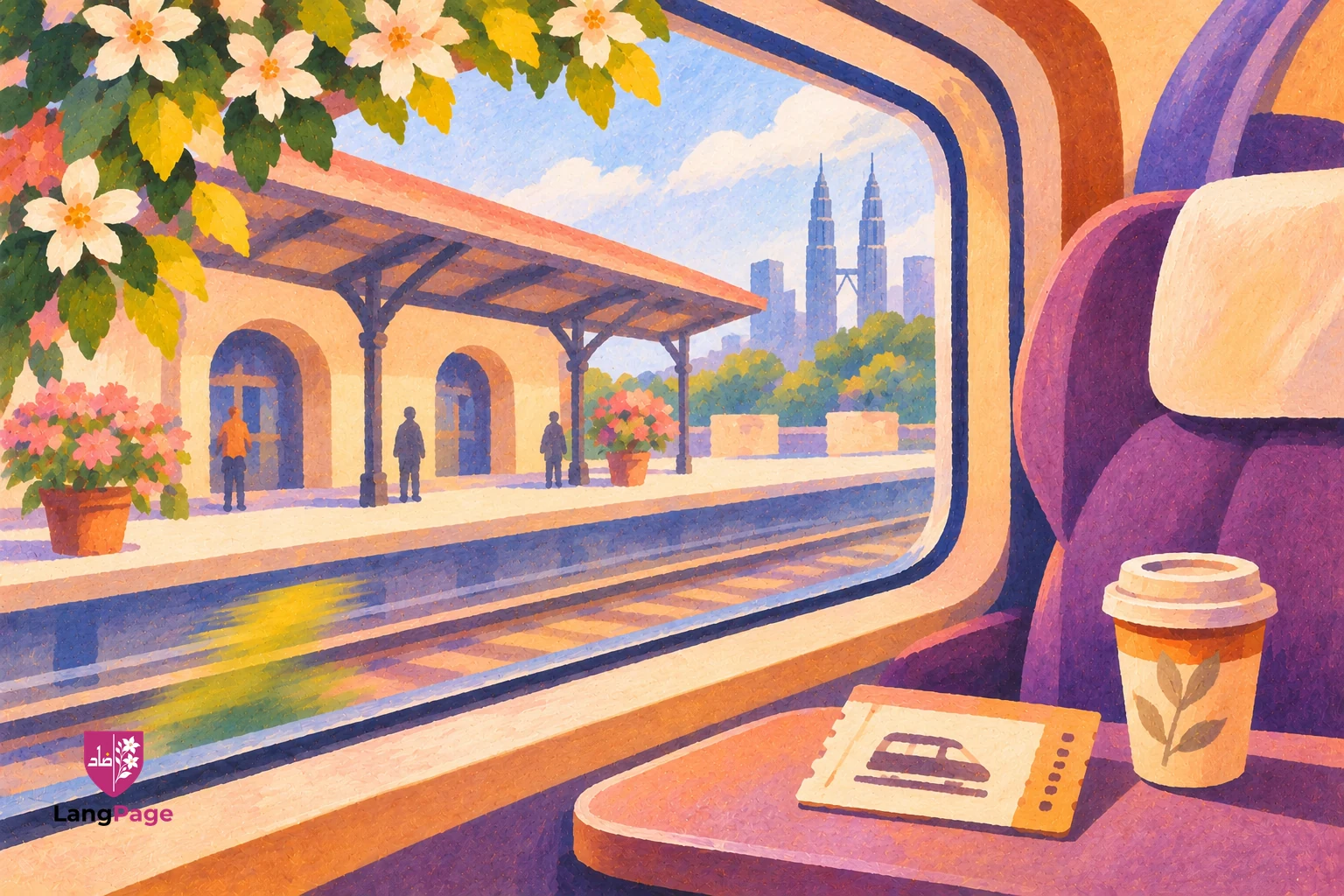
Quick Answer
A train in Arabic is قِطَار (qiṭār), and a train station is مَحَطَّة قِطَار (maḥaṭṭat qiṭār). A ticket is تَذْكِرَة (tadhkira) and a seat is مَقْعَد (maqʿad). These are Modern Standard Arabic (MSA) words, the Arabic of signs, tickets and announcements.
Introduction
A guide for passengers on what to expect onboard the ECRL was in the news, so train travel was on many people's minds. How do you talk about the train and the station in Arabic?
If you want to learn Arabic for everyday life, travel words are some of the most useful, because you can use them the first time you go anywhere. Here are the six words that matter most, with sentences to practise.
What are the key train words in Arabic?
| Arabic | Pronunciation | Meaning |
|---|---|---|
| قِطَار | qiṭār | train (kereta api) |
| مَحَطَّة | maḥaṭṭa | station (stesen) |
| تَذْكِرَة | tadhkira | ticket (tiket) |
| سِكَّة حَدِيد | sikka ḥadīd | railway (landasan kereta api) |
| رَاكِب | rākib | passenger (penumpang) |
| مَقْعَد | maqʿad | seat (tempat duduk) |
سِكَّة حَدِيد: literally "an iron track". The word حَدِيد means "iron", and سِكَّة means "track".
ā, ī and ū are long vowels, ṭ is a heavy "t", q is a deep "k" from the back of the throat, ḥ is a soft breathy "h", dh is like "th" in "this", and ʿ is a deep sound from the throat.
What useful sentences can you use?
| Arabic | Pronunciation | Meaning |
|---|---|---|
| أَيْنَ مَحَطَّةُ الْقِطَارِ؟ | Ayna maḥaṭṭatu l-qiṭār? | Where is the train station? |
| أُرِيدُ تَذْكِرَةً إِلَى كُوَالَالَمْبُور. | Urīdu tadhkiratan ilā Kuwālā Lumbūr. | I want a ticket to Kuala Lumpur. |
| مَتَى يَصِلُ الْقِطَارُ؟ | Matā yaṣilu l-qiṭār? | When does the train arrive? |
| هَذَا مَقْعَدِي. | Hādhā maqʿadī. | This is my seat. |
| الْقِطَارُ يَسِيرُ عَلَى سِكَّةِ الْحَدِيدِ. | Al-qiṭāru yasīru ʿalā sikkati l-ḥadīd. | The train runs on the railway. |
Can you follow a short dialogue?
- الرَّاكِب: أَيْنَ مَحَطَّةُ الْقِطَارِ مِنْ فَضْلِكَ؟ (Where is the train station, please?)
- الْمُوَظَّف: هِيَ هُنَاكَ. (It is over there.)
- الرَّاكِب: وَأَيْنَ أَشْتَرِي تَذْكِرَةً؟ (And where do I buy a ticket?)
- الْمُوَظَّف: فِي الدَّاخِلِ، وَمَقْعَدُكَ رَقْمُ خَمْسَةٍ. (Inside, and your seat is number five.)
Did You Know?
قِطَار comes from the root ق-ط-ر. The word originally described a line of camels walking one behind another, so it was a natural name for a train. You can explore more word families like this in Rooto.
Summary
- Train = قِطَار; station = مَحَطَّة.
- Ticket = تَذْكِرَة; seat = مَقْعَد.
- Railway = سِكَّة حَدِيد; passenger = رَاكِب.
FAQ
What is the difference between قِطَار and سِكَّة حَدِيد?
قِطَار is the train itself. سِكَّة حَدِيد is the railway, the track the train runs on.
Which Arabic should I learn for everyday life?
It depends on your goal. MSA is best for reading signs, tickets and announcements, like the words in this post. When people chat at the station, they use their own dialect, so many learners add one, such as Syrian/Levantine Arabic.
Keep Learning
Not sure whether to start with MSA or a dialect? Read Syrian Dialect vs MSA: What Should You Learn?.
Everyday Arabic is easier to pick up with someone who can correct your pronunciation. LangPage offers live Arabic lessons on Zoom with me, either one-to-one or in the small-group Arabic Kickstart program. You can see all the Arabic courses on the classes page.
Sources: Malay Mail.