Why I Can Understand Arabic but Struggle to Speak It?
Ustazah Alaa · November 18, 2026 · 6 min read
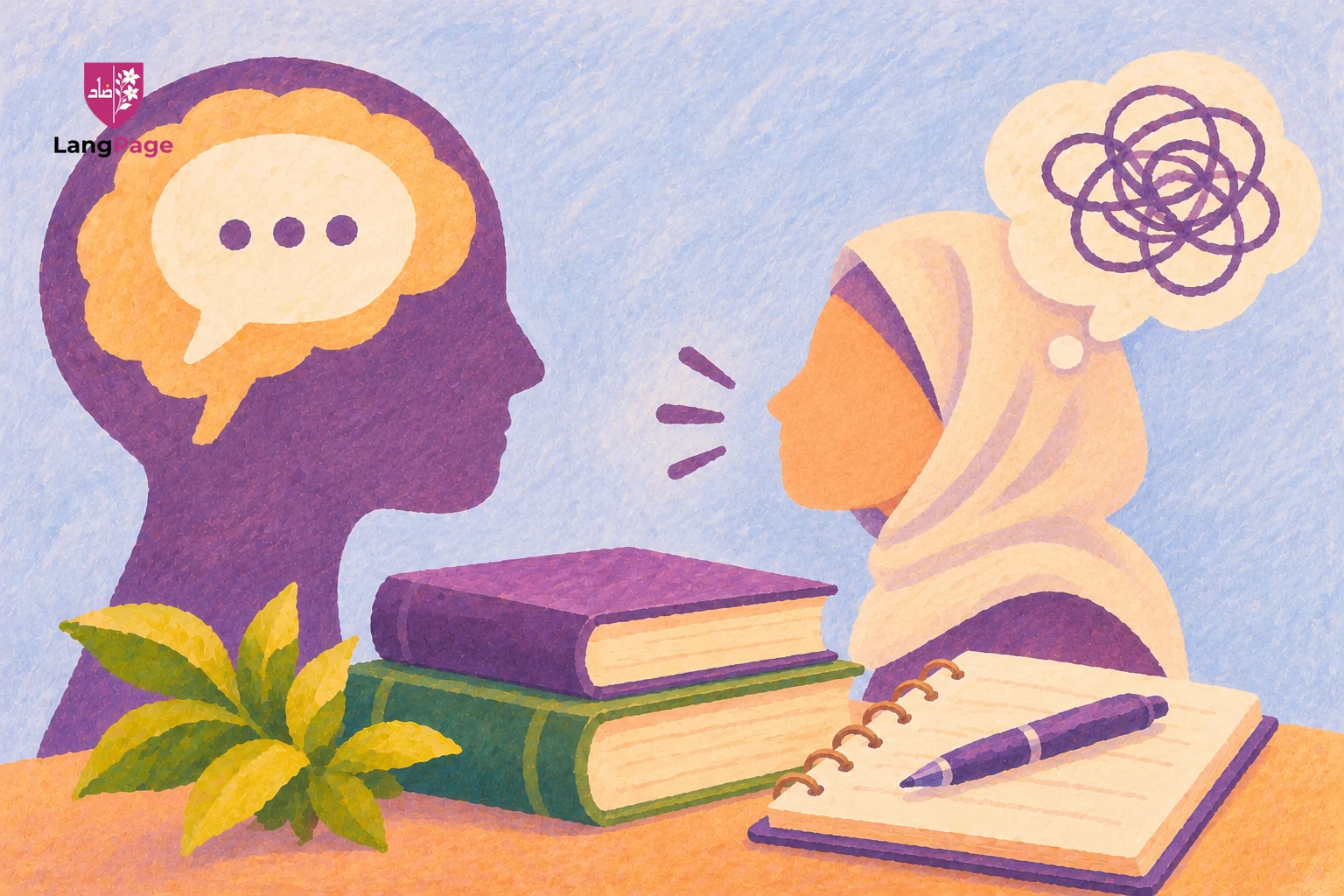
“I understand Arabic but can’t speak it.” You might think this after someone asks you a question you understood perfectly. You know what you want to say, but the Arabic words don’t come. Then, a few minutes after the conversation has moved on, you think of exactly how you could have answered.
When you listen, the other person supplies the words and you work out their meaning. When you speak, you have to recall the words yourself, put them together and say them while the conversation is still going. If that second task feels harder, start with a question you already understand and practise answering it aloud before looking at a model. The examples in this article use Modern Standard Arabic (Fusha).
Why understanding a word feels easier than saying it
Suppose someone asks when you’ll arrive. You recognise مَتَى (“when”), and you already know you’re discussing a visit. Those clues help you understand the question. Now you want to say that you’ll arrive after work. The question didn’t contain the phrase “after work,” so you have to supply بَعْدَ الْعَمَلِ yourself. You might recognise that phrase immediately when someone else says it and still need a moment to bring it to mind.
This is the difference between receptive vocabulary, the words you understand when you hear or read them, and productive vocabulary, the words you can recall and use when you speak or write. In a small experiment, researcher Akifumi Yanagisawa found that learners did better on an immediate word production test after practising recall of the word forms than after practising recall of their meanings. The experiment used invented English words. The Arabic exercise below applies the distinction to a conversation task by asking you to recall a word or phrase from a cue and use it in a reply.
Find out where your reply gets stuck
Think of the last time you understood a question but struggled to respond. Try answering the same question aloud on your own. Notice what happens just before you stop. Are you missing one word? Can you say the words separately but struggle to put them together? Does the whole answer come easily once you’re alone?
| What happens when you try to speak | What to practise |
|---|---|
| You recognise a word when you hear it but can’t recall it when you need it. | Look at a cue, such as a picture or a time on a calendar. Say the Arabic word before checking your notes, then use it in a short reply. |
| You remember the individual words but pause while forming a sentence. | Practise one short sentence and change a single detail, such as the day, time or place. |
| You can answer alone but hesitate when someone is listening. | Ask a practice partner to give you time to finish. Discuss one correction afterwards, then try your answer again. |
| You can answer a rehearsed question, but a small change throws you off. | Ask your partner to change one part of the question. Listen for the new information and choose a reply that fits. |
Start with the difficulty you actually noticed. For example, if you could say “tomorrow” alone but went quiet when someone asked you a question, spend your next few minutes taking turns with a partner. If you couldn’t recall “tomorrow” even on your own, start with a calendar cue and say the word before checking it.
How to practise speaking Arabic with one familiar question
Imagine عَلِيٌّ is arranging a visit and someone asks him when he’ll arrive. In Fusha, the question is مَتَى سَتَصِلُ؟ (When will you arrive?) When addressing a woman, use مَتَى سَتَصِلِينَ؟. You can use the same first-person replies below regardless of who is answering.
1. Answer with one word
غَدًا.
Tomorrow.
This gives the listener the information they asked for. Look away from the example and say the answer aloud. If you get stuck, check the word, cover it and give yourself another chance to recall it. You’re practicing the moment between understanding the question and finding a word that answers it.
2. Expand your answer into a short sentence
سَأَصِلُ غَدًا.
I’ll arrive tomorrow.
Keep سَأَصِلُ (“I’ll arrive”) and change the rest of the sentence. Try سَأَصِلُ الْيَوْمَ. (“I’ll arrive today.”) Then try سَأَصِلُ بَعْدَ الْعَمَلِ. (“I’ll arrive after work.”) Say each reply in full. If one version is harder, practice it again after saying one of the others.
3. Change the question and adapt your reply
هَلْ سَتَصِلُ قَبْلَ الظُّهْرِ أَمْ بَعْدَ الظُّهْرِ؟
Will you arrive before noon or after noon?
The question now asks about a time of day. If you plan to arrive after noon, you could say سَأَصِلُ بَعْدَ الظُّهْرِ. (“I’ll arrive after noon.”) If you’re practising with someone, ask them to change the choices again without showing you the question first. Listen for the detail that changed and give an answer that fits your plans.
Arabic speaking practice for beginners without a partner
Use a question from a lesson or dialogue you already know. Play the question and pause before the speaker replies. Give your own answer aloud, then listen to the model. Your wording may differ from the recorded answer. First check whether your answer fits the question. Then listen for a word or phrase you could use more easily next time.
If you have a few familiar questions, record them as separate voice notes and play them in a different order. Give yourself time to think, then try answering from a cue such as a picture, a day on a calendar or a place on a map. If you’re learning Arabic for work in Malaysia, use a situation you could actually face. For instance, practise answering a visitor who asks أَيْنَ غُرْفَةُ الِاجْتِمَاعِ؟ (“Where is the meeting room?”). Give the real location if you know how to say it, or start with a short reply such as فِي الطَّابِقِ الثَّانِي. (“On the second floor.”)
Check whether you can answer with less help
Return to the same exercise in a later practice session. If you first needed the whole sentence in front of you, try answering with just a cue word. If you can already answer from a cue, put it aside and try a slightly different question. You can also record two attempts and listen for one change. Perhaps you found the word without checking your notes or answered a new version of the question without restarting your sentence.
Choose one question today and give a short answer aloud. Then change one detail and see whether you can adjust your reply. If you’d like to practise taking turns and get feedback on what you say, explore Arabic Kickstart, LangPage’s small-group programme with Ustazah Alaa Jalloul, Arabic educator.